
Eid is one of the most precious moments in the Muslim calendar, a blessed occasion when family and friends gather to celebrate their faith and share their joy. Giving a gift during this sacred celebration is a genuine way to express your love for those close to you while carrying on a tradition deeply rooted in Islamic culture. Whether you are looking to spoil your children after the month of Ramadan or to surprise an adult in your life, the choice of present deserves careful thought so that it reflects both your feelings and the values of our beautiful religion.
The tradition of the Eid gift in Islam
The Prophet Muhammad (peace and blessings be upon him) said: "Exchange gifts and you will love one another" (narrated by Al-Bukhari in Al-Adab Al-Mufrad). These prophetic words highlight the importance our religion places on giving, an act that strengthens family and community bonds. Eid al-Fitr, which marks the end of the Ramadan fast, and Eid al-Adha, the festival of sacrifice, are two ideal occasions to put this sunnah into practice. Parents traditionally give presents to their children to mark these festive days, creating lasting memories tied to religious practice. This custom teaches little ones that Islam is a source of happiness and generosity, strengthening their connection to their Muslim identity from the earliest age.
What gifts to give Muslim children for Eid?
Children await Eid with barely contained excitement, their eyes shining at the thought of receiving their gifts. To meet this anticipation while offering presents that carry meaning, several categories of gifts stand out for their ability to combine fun with spiritual awakening.
Quranic plush toys are enjoying extraordinary success among Muslim families. The Little Deen night light plush, for example, offers a comforting companion that recites surahs and duas, keeping the child company during rest while helping them memorise the Quran with tenderness. This kind of gift turns religious learning into a gentle, reassuring experience, particularly suited to little ones aged 0 to 3 who are discovering their first notions of faith.
Islamic sound books are another remarkable option for sparking the curiosity of young Muslims. The "My First Surahs" sound book lets children discover Quranic recitations through four different voices, creating an immersive and interactive experience. Gentle illustrations accompany each surah, making learning accessible and captivating from the earliest age. This gift combines the joy of discovery with the passing on of the foundations of our religion.
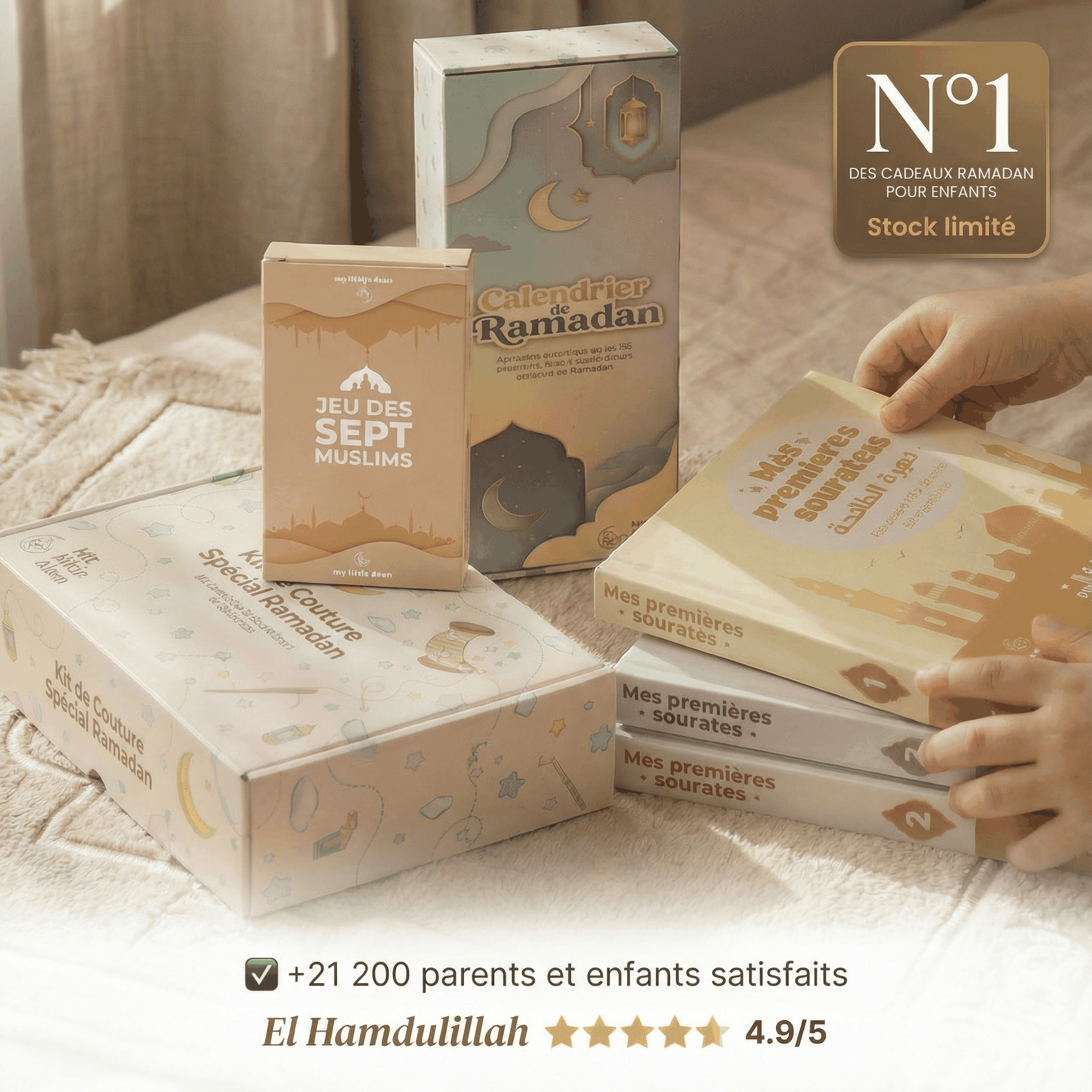
Creative activities with an Islamic theme give children a playful way to prepare for and celebrate Eid. The special Ramadan sewing kit invites children to make their own decorations with patience and care, developing their fine motor skills while connecting them to the traditions of this blessed period. These hands-on activities create moments of family sharing, where parents and children work together on a common project.
The Ramadan calendar: a gift that prepares for Eid
The Ramadan calendar deserves special attention in the lead-up to Eid. This educational tool allows children to experience each day of the sacred month with joy and learning, building gradually towards the final celebration. Fabric wall calendars with illustrated pockets offer a daily ritual that children love: every morning they discover a new surprise or activity linked to their faith. This joyful anticipation makes the arrival of Eid even more meaningful, turning the whole month into a spiritual and emotional preparation.
Gift sets: a complete solution for Eid
Gift packs and sets are an ideal option for parents who want to offer a complete experience. The Ramadan Preparation Gift Pack for children brings together several complementary products: Ramadan calendar, sound book, sewing kit and other carefully selected treasures. These sets arrive in tidy packaging, perfect for giving directly without any extra wrapping. The advantage lies in the coherence of the whole: each item reinforces the others to create a harmonious learning experience.
Matching the gift to the child's age
Each age group deserves a gift suited to its level of development and religious understanding. Little ones aged 0 to 3 thrive with Quranic plush toys and sound books in soft colours and soothing sounds. These first encounters with Quranic recitations create a gentle familiarity with the sacred texts.
Children aged 4 to 7 enjoy activities that engage their creativity and growing curiosity. Sewing kits, Islamic card games and Ramadan calendars are a perfect fit for this stage, when learning happens through play and hands-on exploration.
Older children, aged 8 to 12, look for challenges that respect their intelligence and growing independence. More elaborate DIY activities, illustrated Islamic reading and educational games allow them to deepen their understanding of the religion while developing their skills.
The gift budget: finding the right balance
The generosity encouraged by Islam does not mean spending beyond your means. The Prophet (peace and blessings be upon him) taught us moderation in all things. A gift given with sincerity, however modest, holds priceless value in the eyes of Allah and of the one who receives it. The intention (niyyah) behind the gesture matters far more than the material value of the present. A gift carefully chosen according to the child's age and interests will touch them more deeply than an expensive but impersonal object.
FAQ: Your questions about Eid gifts
Is it compulsory to give gifts for Eid in Islam?
Giving gifts for Eid is not a religious obligation (fard) but falls under prophetic recommendation (sunnah). The Prophet Muhammad (peace and blessings be upon him) encouraged the exchange of presents to strengthen the bonds of love between Muslims. This practice remains a praiseworthy act that brings joy to loved ones, especially children, without being a condition for the validity of the celebration.
How much should you set aside for Eid gifts?
Spending varies according to each family's means and the number of people to spoil. The most important thing is the sincerity of the gesture rather than its financial value. A complete set such as the Ramadan Preparation Gift Pack lets you offer several quality products at a favourable price.
From what age can you give Islamic gifts to children?
From birth, children can receive gifts suited to their development. Quranic plush toys like Little Deen are perfect for little ones aged 0 to 3, thanks to their soft textures and soothing recitations. Sound books and creative kits are aimed at children from the age of 4. Religious awakening begins in the very first months of life, through objects that create a positive familiarity with the sounds and symbols of Islam.
When should Eid gifts be given?
Gifts are traditionally given on the day of Eid, after the congregational prayer (salat al-Eid). This moment of family reunion is the ideal time to exchange presents. Some families choose to spread the gifts across the three days of Eid celebration, prolonging the festive joy. The Ramadan calendar, for its part, is ideally given before the start of the sacred month so that it can accompany the child throughout the 30 days.
How do you choose an Islamic gift that the child will truly love?
The secret lies in the balance between fun and learning. A gift that is too didactic risks quickly losing its appeal, while a toy with no spiritual dimension misses the opportunity to pass on Islamic values. Products that combine interaction, gentleness and religious content, such as Quranic plush toys or sound books, strike this balance. Take into account the child's age, interests and level of familiarity with religious practices to select the perfect gift.

Share:
Islamic Sensory Workshops for Babies: Gentle Activities and Rituals to Nurture Faith and Attachment
The Complete Guide to the Ideal Newborn Gift for a Muslim Baby